
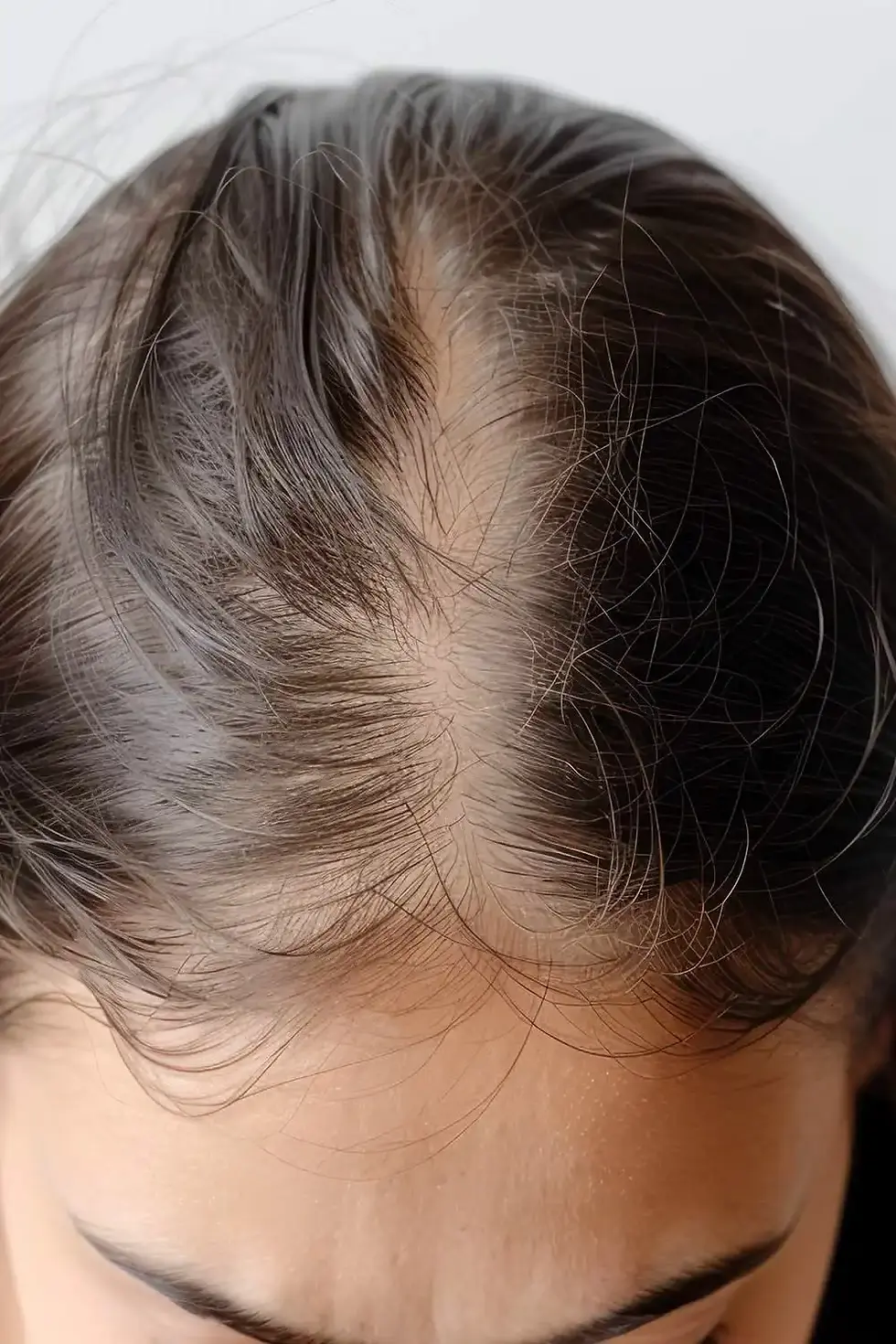
Why it happens?
Hair thinning can result from genetics, hormones, stress, nutrition, medical conditions and ageing, which shrink follicles and shorten the growth cycle. Identifying the cause matters, so consultation and sometimes blood work guide the plan. Regenerative treatments then deliver growth factors to reactivate dormant follicles — they work best on thinning and early loss rather than completely bald areas.
Hair thinning can stem from genetics, hormonal changes, stress, nutritional deficiencies, medical conditions and ageing — often in combination. These factors shrink hair follicles and shorten the growth cycle, so hairs become finer and regrow more slowly. Because the causes differ, identifying what's driving your thinning is important, which is why assessment (and sometimes blood work) comes first.

The SŌMA Approach
Because hair loss has many possible causes, SŌMA treats it as a medical concern led by our regenerative medicine doctors, who look for the underlying drivers before recommending treatment. Our approach is regenerative — supporting your own follicles — and evidence-informed, with realistic expectations. We're honest that timing matters and that results build gradually. Your doctor designs the plan for your situation.
How We Choose for You
As general guidance, regenerative treatments work best on thinning and early loss where follicles are still active, rather than fully bald areas. Underlying factors such as nutrition, stress or hormones are considered as part of the plan. Your doctor assesses the cause and pattern of your thinning before advising an approach.
Treatments for Hair Loss & Thinning
Regenerative options to stimulate follicles and support regrowth.

Exosome Therapy
SŌMA is the only clinic in Bali offering proprietary exosome therapy — both autologous (from your own blood) and GMP-certified stem cell exosomes sourced from Korea's leading laboratory. Our Singapore-standard protocols ensure proper sourcing and medically supervised administration by our doctors, who are specialised in regenerative medicine.

Hair Loss Treatment
Advanced hair loss restoration programs using autologous exosomes, PRP, and vitamin therapy. Only clinic in Bali offering advanced exosome therapy for hair regrowth.
How the treatments compare
Treatment | Best For | Downtime | Full results take up to | Longevity of results |
|---|---|---|---|---|
Regenerative Hair Treatment | Thinning & early hair loss | Minimal | 3-6 months / course | With maintenance |
Exosome Therapy | Supporting follicle activity | Minimal | Gradual / course | With maintenance |
Why Choose SŌMA
Regenerative Medicine Team
Hair loss deserves a medical assessment, not an off-the-shelf product. Our regenerative treatments are led by Dr. Muhammad Nadim (M.Biomed) and Dr. Andrew Uidjaja, both accredited members of the American Academy of Anti-Aging Medicine (A4M).
Accredited & Licensed
SŌMA is a fully accredited member of the American Academy of Anti-Aging Medicine (A4M). SŌMA holds the highest level of specialist clinic license in Indonesia and is the only clinic in Bali following Singapore standards of care, under the medical direction of Dr. Shirley Yuliana Kwee.
Personalised Care
Every treatment begins with a one-to-one doctor consultation to assess your concern and design a personalised plan — never a one-size-fits-all approach.
Results and expectations
Regenerative hair treatments work gradually, with visible change typically over 3-6 months, and they work best on thinning rather than fully bald areas. Some maintenance is usually needed. Individual response varies, and your doctor will set honest expectations based on your assessment.
Frequently Asked Questions
What causes hair loss and thinning?
+
Hair thinning can result from genetics, hormones, stress, nutrition, medical conditions and ageing, which shrink hair follicles and shorten the growth cycle. Identifying the cause matters, so a consultation and sometimes blood work help guide the right approach. Regenerative treatments then work to reactivate follicles and improve density.
Do regenerative hair treatments actually work?
+
Regenerative treatments such as PRP, exosomes and peptide therapy deliver growth factors and signalling molecules that can reactivate dormant follicles and improve hair thickness and density. They work best on thinning hair and early loss rather than areas that are already completely bald, and results build over a course of sessions. Your doctor will set realistic expectations based on your situation.
How many sessions are needed for hair restoration?
+
Most regenerative hair protocols involve an initial course of several sessions spaced a few weeks apart, followed by maintenance. Hair grows slowly, so results typically become visible over 3-6 months. Your doctor will design a schedule based on the degree of thinning and how your hair responds.
Is hair loss treatment suitable for both men and women?
+
Yes. Hair thinning affects both men and women, and regenerative treatments are suitable for both, though the pattern and underlying causes can differ. At SŌMA we assess each person individually and tailor the plan — including addressing underlying factors like nutrition, stress or hormones where relevant.
When is the best time to treat hair thinning?
+
Earlier is better. Regenerative treatments are most effective while follicles are still active but weakening — once an area is fully bald, there's little for the treatment to revive. If you're noticing increased shedding, a receding hairline or thinning density, it's worth getting assessed sooner rather than waiting.
Will I need to keep having treatments?
+
Usually some maintenance is needed, because the underlying causes of thinning continue over time. After an initial course, periodic maintenance sessions help sustain density and support ongoing hair health. Your doctor will recommend a realistic long-term plan rather than promising a permanent one-off fix.