

Why it happens?
Acne develops when pores clog with oil and dead skin, leading to inflammation and breakouts. Deeper or repeated inflammation can damage collagen, leaving atrophic (depressed) scars and uneven texture. Active acne is usually calmed first, then scarring is remodelled with collagen-stimulating treatments, so the order of treatment matters.
Acne begins when pores become clogged with oil and dead skin, allowing bacteria to multiply and trigger inflammation. When inflammation is deep or repeated, it can damage the skin's collagen, leaving atrophic scars, raised scars or lasting marks and uneven texture. Hormones, genetics and skincare habits all play a role, and picking or squeezing raises the risk of scarring. Because active acne and established scars are different problems, they are treated in the right order.

The SŌMA Approach
At SŌMA, acne and scarring are treated as medical dermatological conditions, led by specialist dermatologists. Our approach is to calm active acne first where needed, then remodel scarring — and to choose treatments and settings appropriate for your skin tone, including darker skin. We focus on safe, evidence-informed care rather than aggressive quick fixes. Your dermatologist designs the plan for your individual skin.
How We Choose for You
As a general guide, active breakouts are usually settled before intensive scar work begins; atrophic (depressed) scars often respond to collagen-remodelling approaches; and surface marks and texture to resurfacing. Skin tone is a key factor in what's chosen. Your dermatologist assesses your acne and scar type and sequences the plan safely.
Treatments for Acne & Acne Scars
Medical-grade options to clear breakouts and remodel scarring, safe even for darker skin tones.

Chemical Peels
Our professional-grade NeoStrata® chemical peels deliver controlled exfoliation to treat pigmentation, acne, texture issues, and signs of ageing. Unlike spa-grade peels, SŌMA uses medical-strength formulations administered under doctor supervision for visible, lasting results after just one session.
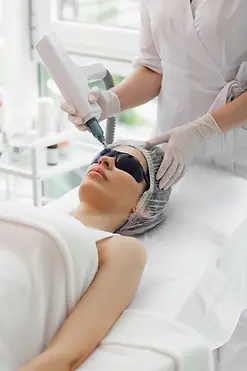
Laser Skin Resurfacing
Our advanced DPL (Dynamic Pulsed Light) laser technology resurfaces and rejuvenates skin on face, neck, chest, and hands. Unlike beauty salons, SŌMA is a medical aesthetics clinic with trained technicians operating under doctor supervision — ensuring your safety with every pulse. Reduce sun damage, pigmentation, fine lines, and scarring to reveal smoother, brighter, more youthful skin.

Vampire Facial
The PRP Vampire Facial combines microneedling with PRP (Platelet-Rich Plasma) from your own blood. This powerful regenerative treatment stimulates collagen, improves texture, and gives you naturally youthful, glowing skin.

Exosome Therapy
SŌMA is the only clinic in Bali offering proprietary exosome therapy — both autologous (from your own blood) and GMP-certified stem cell exosomes sourced from Korea's leading laboratory. Our Singapore-standard protocols ensure proper sourcing and medically supervised administration by our doctors, who are specialised in regenerative medicine.

Microneedling
Microneedling triggers your skin's natural healing to smooth scars, texture and fine lines. At SŌMA we offer both classic microneedling and next-level RF (radiofrequency) microneedling, which adds heat energy deep into the skin for stronger lifting, tightening and scar remodelling.
How the treatments compare
Treatment | Best For | Downtime | Full results take up to | Longevity of results |
|---|---|---|---|---|
RF Microneedling | Atrophic (depressed) acne scars | 1-3 days | 4-6 weeks / course | Long-lasting with course |
Chemical Peels | Breakouts & post-acne marks | 2-5 days peeling | 3-7 days / course | Weeks per session |
Laser Skin Resurfacing | Scar texture & post-acne pigment | 1-3 days | 1-3 weeks / course | 6-12 months |
Exosome Therapy | Calming skin & supporting healing | Minimal | Gradual | Varies |
Vampire Facial (PRP) | Scar remodelling & rejuvenation | 1-3 days | 2-6 weeks / course | Months per course |
Why Choose SŌMA
Specialist Dermatologists
Acne and scarring are treated as medical conditions by our board-certified specialist dermatologists, Dr. Boy Ardi Sp.D.V.E and Dr. Ary Wulandari Sp.D.V.E — not beauticians. This expertise keeps treatment safe and effective across all skin tones, including darker skin.
Accredited & Licensed
As the only fully licensed specialist longevity clinic on the Bukit Peninsula, SŌMA holds the highest level of specialist clinic license in Indonesia and is the only clinic in Bali following Singapore standards of care, under the medical direction of Dr. Shirley Yuliana Kwee.
Personalised Care
Every treatment begins with a one-to-one doctor consultation to assess your concern and design a personalised plan — never a one-size-fits-all approach.
Results and expectations
Acne scarring improves gradually and usually over a course of sessions rather than in one visit, and improvement is often significant but not always complete. Active acne management takes time too. Individual response varies with scar type and skin, and your dermatologist will explain what's realistically achievable for you.
Frequently Asked Questions
What is the best treatment for acne scars?
+
For atrophic (depressed) acne scars, RF microneedling is one of the most effective non-surgical options, supported by clinical evidence and safe for darker skin. Laser resurfacing and chemical peels also help with texture and post-acne marks, and combining microneedling with PRP or exosomes enhances remodelling. Most scarring needs a course of sessions — your doctor will assess your scar type and build a plan.
Can you treat active acne and acne scars at the same time?
+
Usually we calm active acne first, then focus on scar remodelling once the skin is stable, because treating over active breakouts can aggravate them. Some treatments, like certain chemical peels, help with both. Your doctor will sequence your plan safely — clearing the acne, then resurfacing the scars — so the order of treatment is part of the strategy.
Are acne scar treatments safe for darker skin tones?
+
Yes. RF microneedling in particular is well-suited to darker skin because it delivers energy through the needle tips rather than the surface, lowering the risk of pigmentation problems compared with some lasers. Every treatment at SŌMA is doctor-supervised with settings customised to your skin type, and we choose modalities specifically appropriate for your skin tone.
How many sessions will I need for acne scars?
+
Most people need a course of 3-6 sessions spaced about 4 weeks apart, as scar remodelling happens gradually as new collagen forms. The exact number depends on scar depth and type, and combining treatments can improve results. Improvement builds over several months, and your doctor will give you a realistic plan at consultation.
Why do acne scars form and can they be prevented?
+
Deeper or repeated acne inflammation damages collagen, leaving depressed scars and uneven texture. Picking or squeezing spots increases the risk. The best prevention is treating active acne early and avoiding picking — but once scars have formed, collagen-stimulating treatments can remodel them significantly. We can help with both the active acne and the scarring.
Do acne scar treatments have downtime?
+
There's usually some short-lived downtime. RF microneedling and peels can cause redness and mild peeling for a few days, similar to mild sunburn, and possible minor swelling. It settles quickly with proper aftercare and SPF. Because you'll want to avoid strong sun afterwards, we'll plan your sessions around your Bali schedule.