
NAD+ Therapy in Bali Explained: Benefits, Process & Results
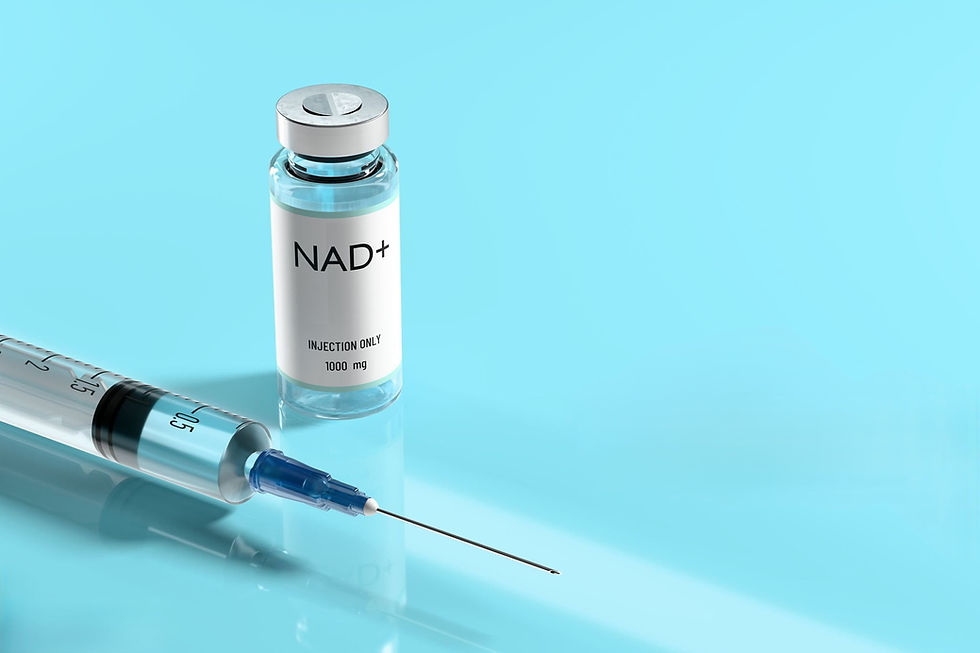
Your body runs on a molecule most people have never heard of. Nicotinamide adenine dinucleotide, or NAD+, sits at the centre of hundreds of metabolic reactions. It helps convert food into energy. It activates enzymes that repair damaged DNA. It regulates your circadian rhythm. And after about age 40, your levels of it start dropping fast.
That decline is not just a biochemical curiosity. Researchers have linked declining NAD+ levels to many of the things we associate with ageing: reduced energy, slower recovery, cognitive fog, and increased vulnerability to age-related diseases. A 2018 review published in Translational Medicine of Ageing found that NAD+ depletion "affects physiological functions and contributes to various ageing-related diseases," with declining levels documented in human muscle, skin, liver, and brain tissue.
NAD+ IV therapy is designed to address that decline directly. By delivering NAD+ intravenously, clinics bypass the digestive system and put the molecule straight into the bloodstream, where cells can use it immediately.
But what does the treatment actually involve? What can you realistically expect? And does the science hold up? Here is a straightforward breakdown.
What is NAD+ and why does it matter?
NAD+ is a coenzyme present in every living cell. It participates in two broad categories of biological work: energy metabolism and cellular maintenance.
On the energy side, NAD+ is a required player in the process that converts glucose and fatty acids into ATP, the molecule your cells use as fuel. Without adequate NAD+, mitochondria (the energy-producing structures inside cells) become less efficient. You feel this as fatigue, brain fog, and slower physical recovery after exercise or illness.
On the maintenance side, NAD+ powers several families of enzymes that keep cells healthy. Sirtuins, a group of proteins sometimes called "longevity genes," depend on NAD+ to function. Sirtuins regulate inflammation, manage stress responses, and help repair DNA damage that accumulates with age. Another NAD+-dependent enzyme, PARP-1, is directly involved in fixing breaks in DNA strands. When NAD+ levels are low, these repair systems slow down.
Research from the American Heart Association's journal Circulation described NAD+ as "a central metabolite involved in energy and redox homeostasis as well as in DNA repair and protein deacetylation reactions." The paper noted that supplementation of NAD+ precursors showed "wide positive effects on metabolic health and age-associated diseases" in both animal and early human studies.
The problem is that NAD+ levels do not stay constant throughout life. Studies published in journals such as Cell Metabolism have reported a 50% or greater reduction in NAD+ levels between young adulthood and middle age in certain tissues. This decline correlates with reduced mitochondrial function, increased oxidative stress, and impaired DNA repair capacity. It is not the only factor in biological aging, but it appears to be a significant one.
What are the benefits of NAD+ therapy?
People seek NAD+ therapy for different reasons, and the clinical evidence varies depending on the specific outcome. Here is what the research supports and where the science is still developing.
Cellular energy and mitochondrial function
This is the best-supported benefit. Multiple studies have demonstrated that restoring NAD+ levels improves mitochondrial function in aged cells. A 2016 study in Cell Metabolism showed that NAD+ repletion in older mice restored mitochondrial function to levels comparable to younger animals. Human trials using NAD+ precursors (NMN and NR) have shown increases in blood NAD+ levels and improvements in markers of mitochondrial health.
For many people, the subjective experience is more sustained energy throughout the day, less afternoon fatigue, and faster recovery after physical activity.
Mental clarity and cognitive function
NAD+ is involved in neuronal energy production and neurotransmitter synthesis. Preclinical research has shown that NAD+ restoration protects neurons from degeneration and improves cognitive function in animal models of aging. Human evidence is more limited, but early clinical trials suggest improvements in attention, processing speed, and mental clarity. Many NAD+ IV therapy recipients report feeling sharper within 24 to 48 hours of treatment, though individual responses vary.
DNA repair and cellular maintenance
DNA damage accumulates with age and contributes to cancer risk, tissue dysfunction, and accelerated ageing. Both sirtuins and PARPs require NAD+ to carry out their repair functions. When NAD+ is abundant, these systems work more efficiently. A 2020 review in Ageing Research Reviews noted that NAD+ supplementation "enhanced DNA repair capacity" in both animal models and human cell studies, though long-term clinical outcomes in humans still require further investigation.
Anti-ageing and longevity markers
Animal studies have consistently shown that raising NAD+ levels extends healthy lifespan. Whether this translates directly to humans is an active area of research. What the evidence does support is that NAD+ therapy can improve several biomarkers associated with biological ageing, including inflammatory markers, insulin sensitivity, and cellular senescence indicators. Some longevity-focused clinics now include NAD+ status in their baseline blood work for exactly this reason.
Recovery and athletic performance
Athletes and physically active individuals use NAD+ therapy to accelerate recovery. NAD+ supports muscle cell repair, reduces exercise-induced inflammation, and helps restore glycogen stores. A study published in Nutrition found that supplementation with a NAD+ precursor "improves muscle quality and function" and "increases cellular energetics." While IV delivery has not been as extensively studied as oral supplementation for athletic recovery, the direct-to-bloodstream approach offers higher bioavailability.
Addiction recovery support
NAD+ therapy has been used in addiction treatment settings since the 1960s. The rationale is that substance abuse depletes NAD+ and damages mitochondria, and restoring these levels can reduce cravings and withdrawal symptoms. The clinical evidence here is mixed and mostly consists of case reports and small studies, but some addiction medicine specialists continue to use NAD+ IV therapy as part of a broader recovery protocol.
How NAD+ IV therapy works: the process
If you have received a standard IV drip before, the setup for NAD+ therapy will feel familiar. The difference is in the infusion rate and duration.
NAD+ is administered through a standard intravenous line, typically into a vein in the arm. A medical professional prepares the solution, inserts the IV catheter, and monitors the infusion throughout.
The infusion itself takes longer than a standard vitamin IV drip. Depending on the dose (usually between 100mg and 500mg), expect the session to last between one and two hours. The reason for the slow drip rate is comfort: NAD+ can cause flushing, warmth, chest tightness, or a mild headache when infused too quickly. These sensations are temporary and dose-dependent. A trained medical team will adjust the flow rate based on your response. Most people find the experience manageable, and side effects typically resolve within minutes of slowing the drip.
During the infusion, you can read, work on your laptop, or simply rest. Some clinics provide comfortable reclining chairs and a quiet environment. At SŌMA Aesthetics and Longevity Club in Bali, all IV sessions are conducted in a dedicated IV lounge treatment setting with medical staff present throughout.
Typical protocols involve an initial loading phase of two to four sessions over one to two weeks, followed by monthly maintenance infusions. Your doctor will recommend a specific schedule based on your health status, age, goals, and response to the initial treatments.
What to expect: realistic results and timelines
Individual responses to NAD+ therapy vary. Some people report noticeable improvements in energy and mental clarity within the first 24 hours. For others, the effects build gradually over the first few sessions.
Common experiences during the first week after an initial course of treatment include improved sleep quality, more consistent energy levels (particularly in the afternoon), sharper focus, and a general feeling of being "more awake." These are subjective reports, but they are consistent across a large number of patients who receive NAD+ therapy.
Measurable changes, such as improvements in NAD+ blood levels, inflammatory markers, and metabolic biomarkers, typically require lab work before and after treatment to document. Clinics that take a data-driven approach will include these measurements as part of the protocol.
What NAD+ therapy is not: a one-time fix. NAD+ levels decline continuously with age, and the body metabolises supplemental NAD+ over time. Ongoing maintenance, whether through periodic IV sessions, oral supplements, or lifestyle modifications (exercise, fasting, and adequate sleep all support natural NAD+ production), is necessary to sustain benefits.
It is also worth managing expectations about what NAD+ therapy can and cannot do. It will not reverse decades of ageing overnight. It will not replace a healthy diet or exercise routine. It is one tool within a broader approach to longevity, and it works best when combined with other evidence-based interventions.
Why medical supervision matters for NAD+ IV therapy
NAD+ IV therapy involves intravenous access, dose calculation, and real-time monitoring. These are medical procedures, and they should be treated as such.
The most common concern with NAD+ infusions is the rate of administration. Infuse too fast and patients experience uncomfortable symptoms: chest pressure, flushing, nausea, or shortness of breath. These are not dangerous when managed properly, but they require a medical professional who can adjust the drip rate and monitor vital signs. An untrained provider might not recognise these signs or know how to respond.
There is also the question of dosing. The optimal NAD+ dose depends on the patient's weight, age, overall health, and goals. Someone using NAD+ for general longevity support needs a different protocol than someone recovering from chronic fatigue or supporting addiction recovery. A blanket "one-size-fits-all" approach is inadequate.
Product quality is another reason medical oversight matters. NAD+ is not regulated as tightly as pharmaceutical drugs in most jurisdictions. The purity, concentration, and sterility of the product vary between suppliers. Licensed specialist clinics like SŌMA Aesthetics and Longevity Club in Bali that source from verified pharmaceutical distributors and follow cold-chain storage protocols offer a different level of safety than providers operating from non-clinical settings and offering mobile IV services, which purchase from unvetted sources.
Finally, NAD+ therapy should be considered in context. A responsible provider will assess your overall health, review your current medications and supplements, and determine whether NAD+ IV therapy is appropriate for you. Certain conditions may require dose modification or additional monitoring.
Common misconceptions about NAD+ therapy
A few myths circulate online that are worth addressing directly:
"NAD+ supplements do the same thing as IV therapy."
Oral NAD+ precursors like NMN and NR can raise blood NAD+ levels, but the bioavailability is lower than IV administration. The digestive system breaks down a significant portion before it reaches the bloodstream. IV therapy delivers NAD+ directly to circulation, resulting in higher peak levels. Whether that difference matters for your specific goals is a conversation to have with your doctor. Both approaches have a role.
"NAD+ therapy is dangerous."
A 2020 review in Ageing Research Reviews found that NAD+ precursors "presented with a limited acute toxicity profile." The side effects of IV administration (flushing, warmth, mild nausea) are well-documented, predictable, and manageable by adjusting the infusion rate. Serious adverse events are rare when the treatment is administered by qualified medical staff with appropriate monitoring.
"NAD+ therapy is just a wellness trend with no science behind it."
The science is real, though it is still developing. Hundreds of peer-reviewed studies have established the role of NAD+ in cellular metabolism, DNA repair, and age-related decline. Human clinical trials are at an earlier stage than animal research, but the mechanistic rationale is well-supported. What is fair to say is that the long-term outcomes of NAD+ supplementation in humans are not yet fully characterised, and more research is needed.
"Anyone can administer NAD+ IV therapy."
Technically, anyone with an IV kit could try. That does not mean they should. IV access carries risks of infection, air embolism, and vein damage when performed by untrained individuals. NAD+ infusion specifically requires expertise in dose titration and patient monitoring. Always choose a clinic where medically qualified staff perform the procedure.
Cellular Regeneration therapy at SŌMA in Bali
SŌMA Aesthetics and Longevity Club, a licensed specialised regenerative medicine clinic, offers a number of cellular regenerative and IV therapies as part of its broader approach to longevity medicine. The clinic operates from Uluwatu, Bali, and draws patients from across the Bukit Peninsula, Canggu and internationally.
What distinguishes SŌMA's approach is the medical framework around the treatment. Every cellular regenerative IV therapy session begins with a free consultation to provide a patient-tailored recommended protocol. The clinic's medical director, Dr Shirley Yuliana Kwee (MBChB, GDFM), trained in the UK and Singapore and has over 20 years of clinical experience in regenerative and aesthetic medicine, and our doctors, specialised in regenerative medicine, have designed advanced and first-in-Bali treatment protocols. Cellular Regeneration Treatments at SŌMAare not offered as an isolated drip you book online and show up for; it is prescribed within the context of your health profile and your goals.
SŌMA sources only the highest quality pharmaceutical-grade Cellular Regeneration compounds from authorised distributors and maintains strict cold-chain storage protocols. The clinic follows the same product-handling standards as leading medical centres in Singapore, where Dr Shirley practised for over 20 years.
For patients interested in a comprehensive longevity protocol, SŌMA integrates Cellular Regeneration therapy with other treatments: stem cells, peptide therapy, clinical blood work for longevity, PRP, and autologous exosome therapy. The idea is that no single treatment addresses biological ageing in isolation. Nicotinamide Adenine Dinucleotide Therapy restores cellular energy and repair capacity. Peptides target specific biological pathways. Blood work identifies which systems need attention. Regenerative treatments support tissue repair. Together, they form a more complete picture.
SŌMA also offers a mobile IV service across South Bali, where certified nurses bring the treatment to your villa or hotel. The same medical protocols apply, the same products are used, and the treatment is supervised remotely by the clinic's medical team.
For Australians and other international visitors, pricing is worth noting. NAD+ IV therapy at premium clinics in Sydney or Melbourne typically costs between $350 and $500 AUD per session, while Cellular Regeneration at SŌMA offers 40%+ savings while maintaining the same clinical and product standards. Many visitors combine Cellular Regeneration therapy with other aesthetic and longevity treatments during a planned trip, which makes the overall value proposition more compelling.
Is NAD+ therapy right for you?
NAD+ therapy is not for everyone, and no honest provider would claim otherwise. It is best suited for adults experiencing age-related energy decline, cognitive changes, or slow recovery, as well as those proactively investing in long-term health optimisation.
If you are under 30, generally healthy, and not dealing with specific recovery needs, the cost-benefit calculation may not favour IV therapy over lifestyle interventions like regular exercise, adequate sleep, and intermittent fasting, which all support natural NAD+ production.
If you are over 40, noticing changes in energy, cognition, or recovery capacity, and are interested in a data-driven approach to ageing, NAD+ therapy is worth discussing with a qualified longevity medicine provider. Start with blood work to establish your baseline, consult a doctor who understands the treatment, and build a plan that fits your biology and your goals.
The science behind NAD+ is solid, its safety profile is well-documented, and its clinical applications are growing. What matters most is who administers it, what product they use, and whether they treat you as an individual rather than a line item.
You can learn more about Cellular Regeneration and consult our regenerative medicine doctors to advise you on which therapy is adequate for you. Consult our regenerative medicine SOMA's full treatment menu at somalongevityclub.com, or reach out via Instagram @somalongevityclub to book a consultation.


